



Switzerland is so many things. Home to some of Europe’s tallest mountains and most unspoiled wildernesses, it’s also home base for organizations that shape the world, including the United Nations, FIFA, the Red Cross, and the World Health Organization.

Travel eSIMs you may like:


Beyond cuckoo clocks and chocolate shops, this is a unique country with four official languages, no head of state, and more nuclear shelters per population than anywhere else on earth.
It’s also budget-meltingly expensive, both to live in and to visit. The high-paying jobs available in Switzerland give the country one of the highest costs of living in the world, and you’ll feel that from the moment you arrive.
And yet, even here, there are ways to save money. Visiting Switzerland on a budget is possible if you know where to go and what to do. Let’s take a look at some ways to enjoy all this country has to offer without needing a fat Swiss bank account.
Best Budget-Friendly Places to Visit in Switzerland
Switzerland is known for luxury, but also for its incredible nature. And that’s key to enjoying Switzerland on a budget. The cheapest cities in Switzerland for tourists offer a variety of experiences, from high-end to completely free. Here are some great choices to travel Switzerland on a budget:
Interlaken
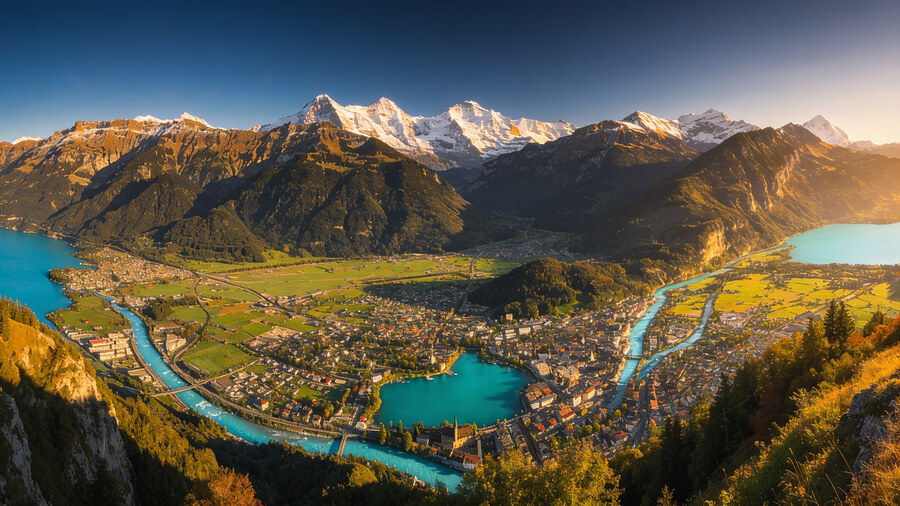
If you want to see the Alps without paying resort prices, Interlaken is the perfect base. The town sits on a narrow strip of land between two glacier-fed lakes, Lake Thun and Lake Brienz, and is surrounded by some of the most famous peaks in the country, including the Eiger, Mönch and Jungfrau.
The best views here won’t cost you a cent. Head to the Höhematte, a huge open meadow right in the centre of town, for a front-row seat to the snowy Jungfrau, with paragliders floating down around you. Fancy something more active? Skip the funicular and hike up to Harder Kulm for a bird’s-eye view of both lakes. A short trip out to Iseltwald on Lake Brienz rewards you with impossibly turquoise water and a postcard-perfect village.
Interlaken also works brilliantly as a jumping-off point for the wider Jungfrau region, with two train stations connecting you to the rest of the country. Stay overnight and you’ll get a guest card with free local buses and trains, and if you’re watching every franc, nearby villages like Wilderswil and Matten are cheaper places to sleep.
Lucerne
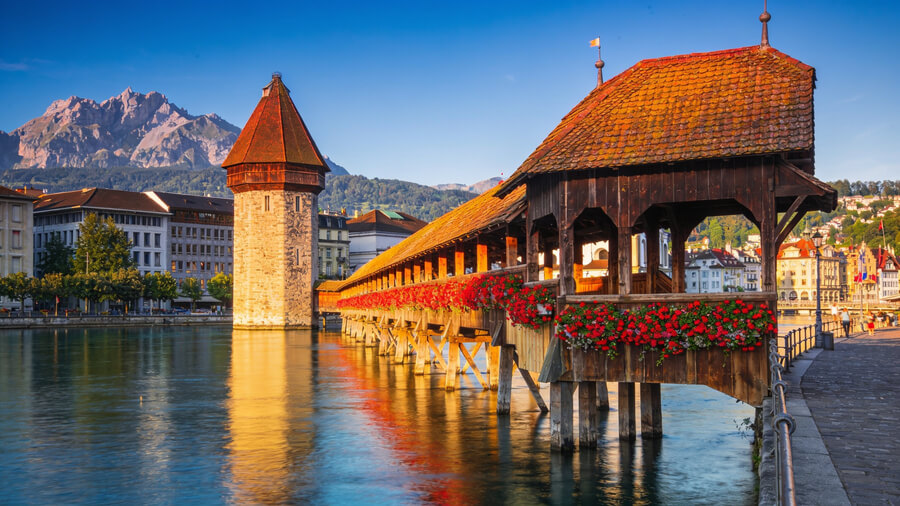
If you want those iconic shots of a fairytale Swiss town, Lucerne is where you’ll get them. The compact Old Town is all painted facades, cobbled squares and church spires, sitting right on the edge of a sparkling lake with mountains in every direction.
The famous Chapel Bridge, one of the oldest covered wooden bridges in Europe, is free to stroll across, and its painted panels give you a quick lesson in local history. Just downstream, the Spreuer Bridge is quieter and just as charming. Climb the old Musegg Wall, where several towers are open to the public for free during the warmer months and offer brilliant views over the rooftops. Don’t miss the Lion Monument either, a giant dying lion carved into a sandstone cliff that’s surprisingly moving.
In summer, the lake is perfect for swimming, and the Ufschötti public beach is a local favourite for a free afternoon in the sun. Mount Pilatus and Mount Rigi are spectacular but pricey to reach by train or cable car, so if your budget only stretches to one big excursion, choose wisely or tackle part of the way on foot.
Lauterbrunnen
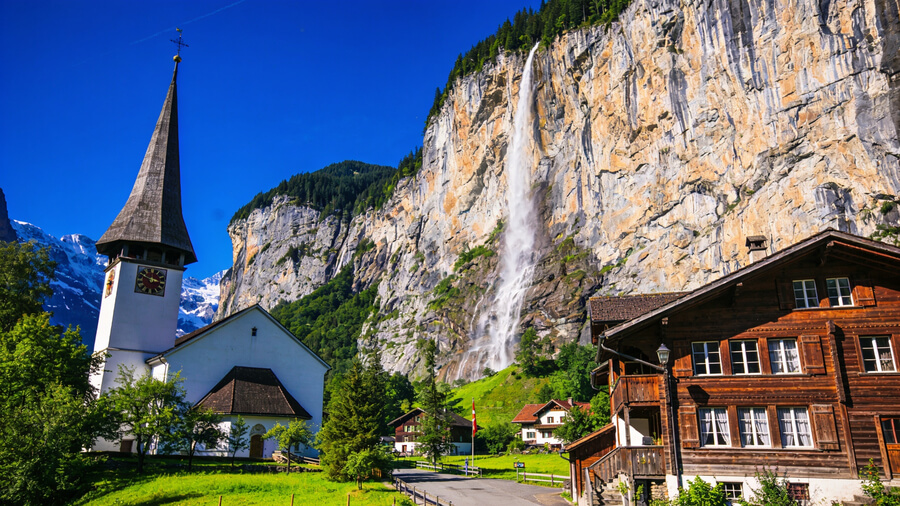
With some of the most dramatic scenery in the country, Lauterbrunnen is a must on any budget trip to Switzerland. This deep glacial valley is lined with towering limestone cliffs and is home to around 70 waterfalls, which is said to have inspired Tolkien’s Rivendell. Spend an hour here and you’ll see why.
The star of the show is Staubbach Falls, which drops nearly 300 metres straight off the cliff edge right beside the village. In summer, you can walk up a path that takes you right behind the falling water, completely free. From there, the flat walk along the valley floor to Stechelberg is an easy stroll past more waterfalls, rivers and grazing cows.
For bigger views, hike up to the car-free mountain villages of Wengen or Mürren, perched on the cliffs above. Trümmelbach Falls, a series of glacial waterfalls thundering inside the mountain, is one of the few paid attractions here and well worth it if you can stretch the budget.
Accommodation is limited and fills up fast, but the valley’s campsite has some of the best views of any budget stay in Europe.
Zürich
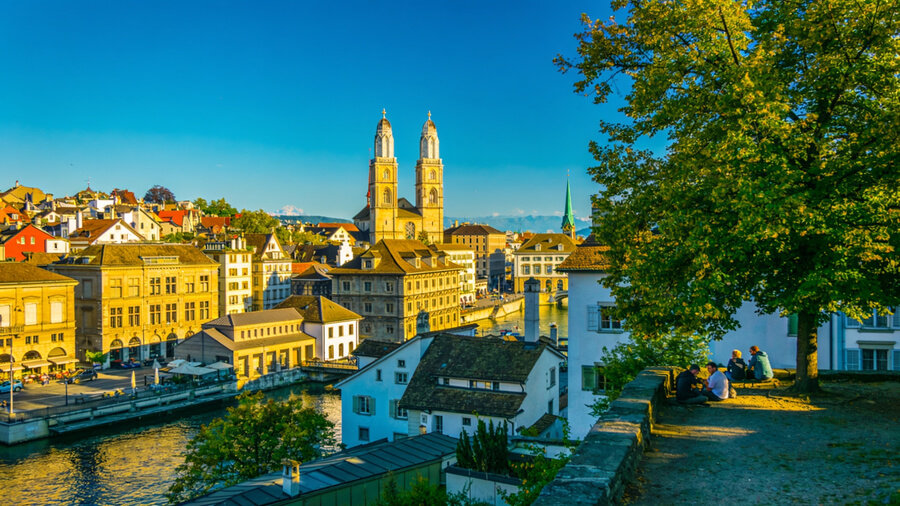
Zürich is known as one of the most expensive cities in the world, where the average salary is above $100,000 USD per year. But even here, you can have a cracking time without emptying your wallet.
Start in the Old Town, where narrow lanes wind between guild houses, cafes and boutiques on both sides of the Limmat River. Walk up Lindenhof Hill, a leafy square on the site of an old Roman fort, for panoramic views over the rooftops to the twin towers of the Grossmünster. The church itself is free to enter.
Zürich also has a handful of excellent free museums, including the Zoological Museum of the University of Zürich and the Paleontological Museum, which are perfect for a rainy day. When the sun’s out, do as the locals do and head for the water. The lake promenade is great for a long walk, and the city’s riverside and lakeside bathing spots are packed on hot days.
For a view of the whole city, lake and Alps beyond, take a train or hike up Uetliberg, Zürich’s local mountain. The trails at the top are free, and the sunset views are hard to beat.
Accommodation
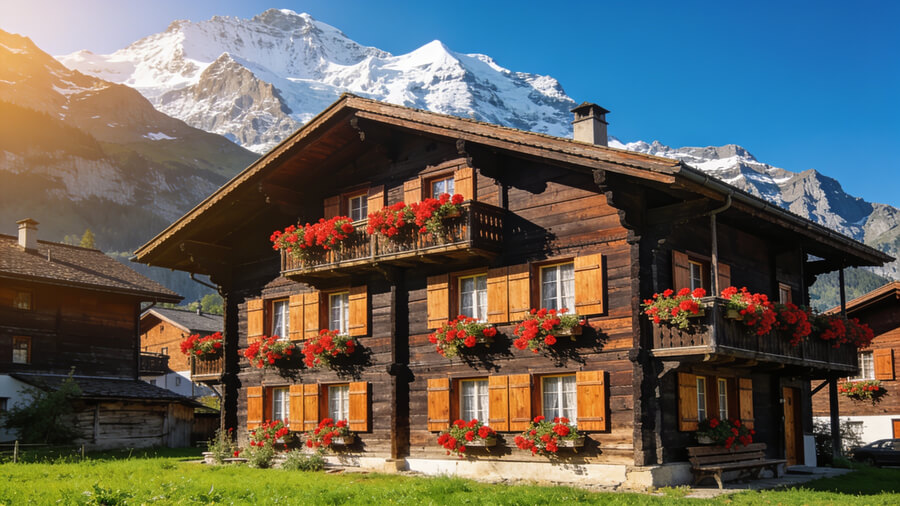
This is going to be your biggest expense, and it’s where a few smart choices can save you hundreds. Hotels in Zürich and Geneva are some of the priciest in Europe, but you don’t have to sleep in the big cities to see them.
Switzerland’s public transport is famously efficient, so staying in a smaller town nearby and catching the train in costs far less. Around Interlaken, villages like Wilderswil and Matten are just minutes away and noticeably cheaper.
Hostels are another great option. Swiss Youth Hostels are clean, well located and often in seriously scenic spots, with private rooms if dorms aren’t your thing. In summer, campsites are dotted all over the country, many with lake or mountain views that hotels charge a fortune for.
Easy wins:
- Travel in the shoulder seasons, from April to June or September to October, when prices drop and crowds thin out
- Ask about a guest card when you check in, as many destinations, including Geneva, Basel, Bern and Interlaken, give overnight guests free local public transport
- Book early for summer and ski season, because the cheapest rooms go first
- Choose places with a kitchen, which makes saving on food so much easier
Food
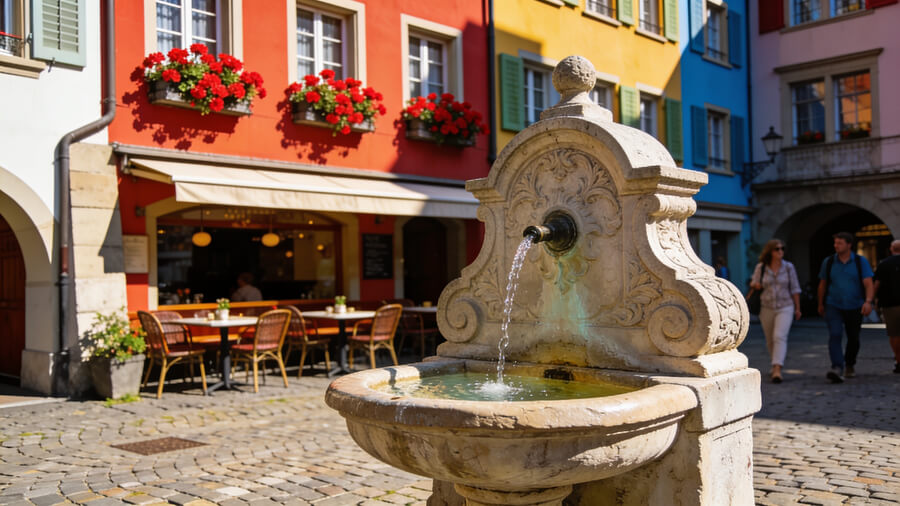
Eating out in Switzerland is where budgets go to die. A casual sit-down dinner can easily cost more than you’d spend on a full day of meals at home, so this is where a bit of planning pays off. The good news is that some of the best food experiences here are surprisingly cheap.
Supermarkets are your best mate. Coop and Migros are everywhere, while Denner, Aldi and Lidl are even cheaper. Grab fresh bread, local cheese, fruit and a bar of Swiss chocolate, and you’ve got a picnic that tastes even better beside a lake or halfway up a mountain. Both Coop and Migros also run self-service restaurants in many towns, serving hearty hot meals for a fraction of what you’d pay elsewhere.
When you do eat out, make lunch your main meal. Many restaurants offer a fixed-price daily menu at lunchtime, usually a main with soup or salad, and it’s often much better value than ordering the same food at dinner.
Easy wins:
- Skip the bottled water. Swiss tap water is excellent, and many cities have free public drinking fountains, with Zürich alone having over a thousand
- Stock up before Sunday, as most shops close, though supermarkets at major train stations usually stay open
- Save your splurge for one proper cheese fondue or raclette night, because you can’t visit Switzerland without one
- Booking accommodation with a kitchen or at least a fridge means breakfast and the odd dinner cost next to nothing
Attractions
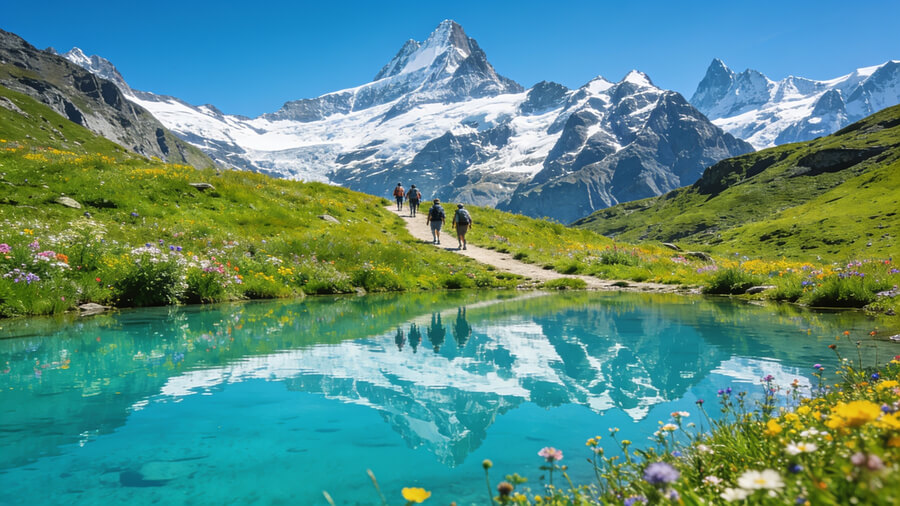
The best things to do in Switzerland are often free, and that’s what makes a budget trip here possible. The mountains, lakes and old towns don’t charge admission.
Hiking is the big one. Thousands of kilometres of well-marked trails crisscross the country, and you’ll find yellow signposts everywhere showing distances and walking times. In summer, swimming is just as good. The lakes and rivers are crystal clear, and many cities have free or cheap public bathing spots right in the centre, with Zürich’s riverside baths a local favourite.
The paid attractions to watch out for are the mountain railways and cable cars, which can cost a small fortune. Pick one or two that really matter to you rather than riding them all, and consider hiking up and catching the cable car down.
Easy wins:
- Look at a Swiss Half Fare Card if you’re planning lots of travel, as it halves most train, bus, boat and many mountain railway fares
- The Swiss Travel Pass covers unlimited travel plus free entry to over 500 museums, so it can pay for itself quickly on a packed itinerary
- Join a free walking tour in the bigger cities for a great introduction, just tip what you think it’s worth
- Explore the old towns on foot, as wandering Lucerne, Bern or Zürich costs nothing and is a highlight in itself
Staying Connected in Switzerland Without Roaming Fees
Whether you’re downloading a hiking map or checking restaurant reviews, travel is so much easier when you can stay connected. But the last thing you want after an expensive trip is to come home and get hit with roaming fees by your phone provider. That’s why the first thing you should do before you get to Switzerland is download an eSIM.
These virtual SIM cards use local networks to give you extremely affordable phone and data service wherever you are. A travel eSIM from ZenSim can be set up instantly, even before you reach the country, and gives you the best possible coverage at unbelievably low rates. An EU eSIM covers you in Switzerland and across the continent, keeping you connected in thirty-nine different countries for as little as $21AUD for thirty days.
How To Save Money When Travelling in Switzerland
Switzerland’s reputation as an expensive place to visit is well-founded. But even here, a little bit of planning means you can travel cheaply without compromising your experience. An affordable eSIM is your first step to enjoying budget travel in Switzerland. And saving money on roaming fees means you’ll have more to spend on everything this country has to offer.
FAQs
Switzerland's train network is efficient but expensive. Regional passes can lower costs, and booking tickets in advance helps too. Buses are often a cheaper alternative in some areas.
Smaller cities like Interlaken and Lucerne tend to offer better value than major hubs like Zürich and Geneva. Both have plenty of free attractions, including hiking trails, lakeside beaches, and scenic old towns.
For budget travel in Switzerland, around €80-€120 per day can be enough if you're careful - cooking some meals, staying in hostels, and focusing on free outdoor activities. A more comfortable experience with restaurants and attractions will run €150-€250 per day.
The shoulder seasons - April to June and September to October - tend to offer lower hotel prices and fewer crowds than peak summer and ski winter. You'll also get good weather for hiking and outdoor activities during these periods.
Travel eSIMs you may like:
Written by
Josh Warner
Co-founder of ZenSim, full-time banana bread lover.
Josh has been an engineer for the past 12+ years and in the telecommunications industry for the past six. A self proclaimed developer, designer, copywriter and occasional gym goer, if you have used a ZenSim website or app, it's likely Josh was the one who designed & built it.


Get amongst it
Join the community
We will reach out when we launch new products, about our sustainability projects, specials, new innovations or maybe even cool sh*t we think is inbox worthy.


