



Lisbon’s been hot for a while, and I don’t just mean the weather. It’s one of the most popular places for tech startups in the world, and is sometimes referred to as Europe’s Silicon Valley.

Travel eSIMs you may like:


Beyond tech founders drawn by cheap rents and a low tax regime, Portugal’s capital is also hugely popular with visitors, recently ranking 15th on TripAdvisor’s 2026 list of best destinations in the world.
If you’ve ever been there, you’ll know exactly why.
The first time I went to Lisbon, I wasn’t all that enthusiastic. Friends convinced me to go, saying I’d love it, and they were right.
Lisbon has everything you want from a European capital. A historic centre full of cobblestoned streets, great restaurants and interesting shops. Multiple viewpoints, thanks to a city built on seven hills overlooking the wide estuary of the Tagus River. Prices are rising along with its popularity, but it still offers some of the cheapest travel in Western Europe. And as the capital of what was once a globe-spanning empire, Lisbon has all the faded grandeur of the very best European cities.
So what is there to do in Lisbon? Plenty. Here are my top five, followed by ten more things that make the city worth adding to your bucket list.
1. Explore Alfama
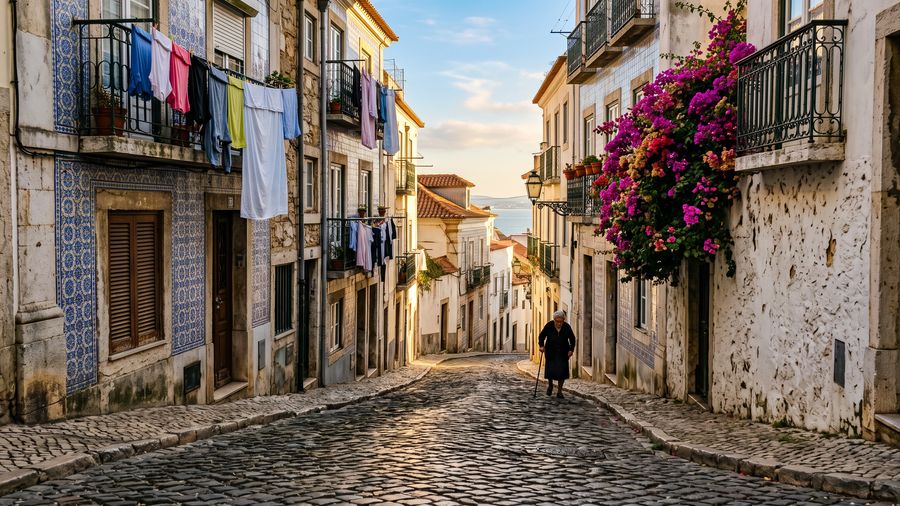
You don’t have to be a history nerd to enjoy Lisbon’s oldest neighbourhood, but it helps.
The modern city looks the way it does because of a devastating earthquake, tsunami and fire in 1755. Most of the historic buildings in the centre date from the rebuild that followed. Alfama, perched on the hill below the castle, largely survived, so it’s where you can see what Lisbon was like before the catastrophe.
It’s a maze of narrow alleyways, steep staircases, hidden squares and buildings covered in tiles. The best thing you can do is wander without a rigid plan. Pop into tiny cafés, peek into the Sé (Lisbon’s 12th-century cathedral) and stop at the Miradouro de Santa Luzia for one of the city’s prettiest views over the terracotta rooftops to the river.
And don’t miss the fado. This haunting, melancholy music is synonymous with Portuguese culture, and in the evening the restaurants of Alfama come alive with it. Book a table at a small fado house for dinner and a show, and remember that silence is expected while the fadista sings.
2. Ride Tram 28
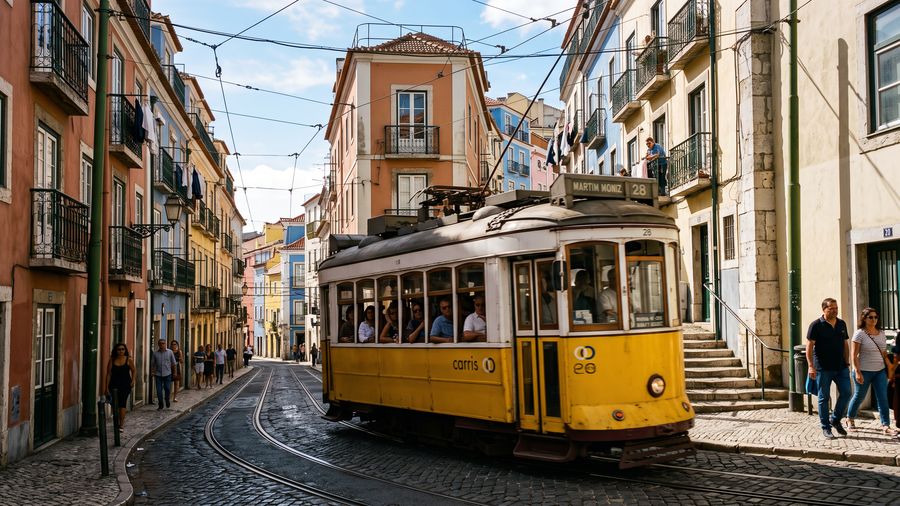
Tram 28 isn’t the hidden gem it used to be, but it’s still a great thing to do in Lisbon, especially on a budget.
The tram isn’t meant to be a tourist attraction. It’s just part of the city’s public transport network, and its vintage yellow carriages rattle up hills that would defeat most modern vehicles. It just so happens that it runs through some of the city’s most interesting neighbourhoods, including:
- Alfama
- Graça
- Baixa
- Chiado
- Estrela
The tram gets packed in peak season, with long queues at the Martim Moniz terminus. Board early in the morning or in the evening, or ride it from the other end at Campo de Ourique. Pickpockets love the crowded carriages, so keep your phone and wallet secure. You’ll be sharing the ride with locals heading to work, so try not to be the stereotypical annoying tourist.
Want the same experience with fewer people? Tram 12 does a short loop through Alfama and Baixa and is usually much quieter.
3. Visit Belém
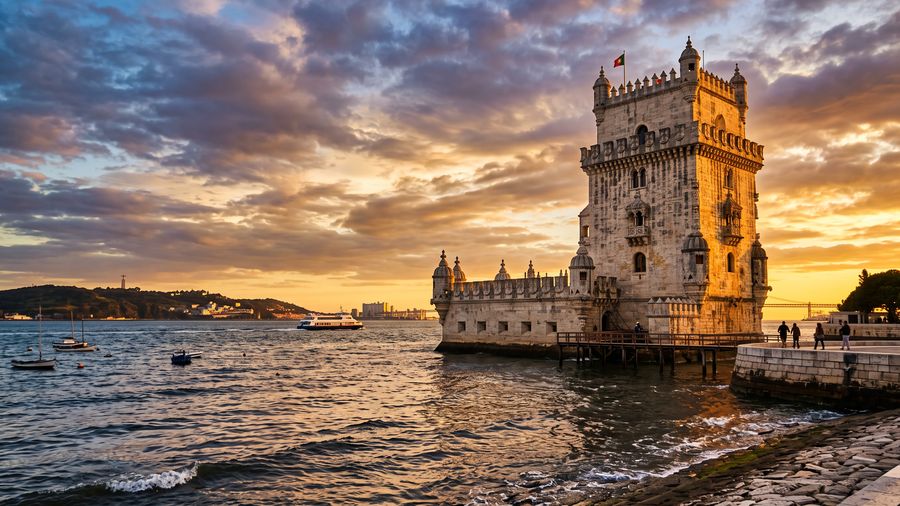
In some ways the opposite of Alfama, Belém is where you see the legacy of Portugal’s Age of Discovery, when this relatively small country had a completely outsized impact on the world. It sits on the riverfront about 6 km west of the centre, and the easiest way there is Tram 15 from Praça da Figueira or a short train from Cais do Sodré.
The neighbourhood is home to some of Portugal’s best-loved attractions, including:
- Belém Tower, a fortress that once guarded the river mouth
- Jerónimos Monastery, a UNESCO-listed masterpiece of ornate Manueline architecture
- The Monument to the Discoveries
- MAAT, a striking contemporary art and architecture museum
And don’t forget the custard tarts. Right next to Jerónimos Monastery you’ll find Pastéis de Belém, the bakery where Portugal’s world-famous pastel de nata has been made since 1837, using a recipe that started in the monastery next door. The takeaway queue moves fast, but the huge seated rooms inside often have no wait at all.
4. Browse the Bertrand Bookstore

This might be the book nerd in me coming out, but how do you not visit the world’s oldest operating bookshop?
Bertrand, in the elegant Chiado district, has been in continuous operation since 1732 and has a Guinness World Record to prove it. Inside, it’s a warren of rooms lined with bookshelves, and while most titles are in Portuguese, there’s a good selection in other languages too.
You can’t miss its tile-covered façade, which is about as Portuguese as it gets. A book makes a fantastic souvenir, especially as the staff will stamp it with the shop’s seal to commemorate your visit.
Chiado itself is worth a slow wander once you’re done. It’s Lisbon’s literary and café quarter, home to A Brasileira, where a bronze statue of the poet Fernando Pessoa sits at an outdoor table. Nearby are the ruins of the Carmo Convent, a Gothic church left roofless after the 1755 earthquake, which now houses a small archaeological museum under the open sky.
5. Eat at Time Out Market
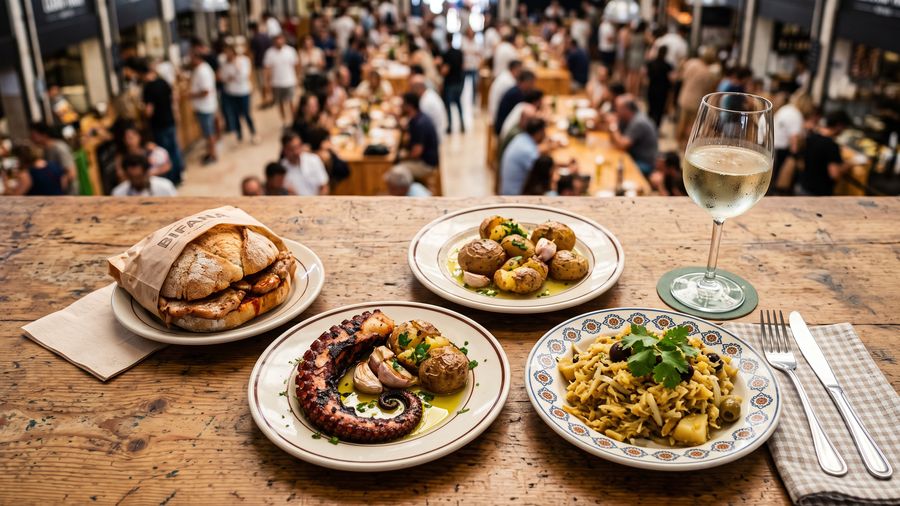
There are tons of great places to eat in Lisbon, but if you’re struggling to decide, Time Out Market is the perfect introduction to Portuguese cuisine.
Located on the waterfront opposite Cais do Sodré station, it was built as a food hall inside the historic Mercado da Ribeira. Communal tables fill a central space surrounded by stalls run by well-known local chefs and restaurants, so you can try everything from bacalhau (salted cod) and grilled octopus to bifanas (pork sandwiches) and fusion dishes from around the world.
It’s ideal for groups with different tastes, or foodies who want to try a bit of everything in one place. Prices are higher than at a typical local tasca, and it gets very busy at lunch and dinner, so aim for an early or late meal. For a cheaper, more local feel, look for a family-run tasca with a handwritten menu of the day (prato do dia), where a full lunch often costs less than a cocktail in the market.
10 More Things to Do in Lisbon
The five above are my essentials, but Lisbon has a lot more up its sleeve. Here are ten more ideas to fill out your trip, from classic sights to easy day trips out of the city. None of these are second-tier, exactly. Some are big-name sights that just didn’t squeeze into my top five, and others are quieter spots I keep going back to on every visit. A few, like Sintra and Cascais, take you out of the city for the day, which is a nice change of pace if you’re staying for four nights or more. Mix and match them depending on your interests, your energy levels and how many hills your legs can handle.
Climb to São Jorge Castle
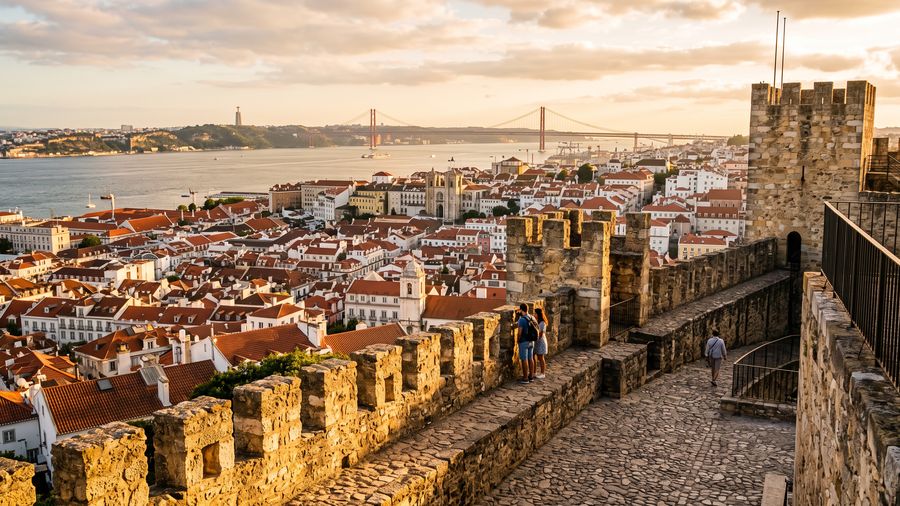
São Jorge Castle crowns the highest hill in the old city, above Alfama. Its walls date back to the Moorish period, and after the Christian conquest in 1147 it served as a royal palace for centuries. Today it’s mostly ramparts, towers and gardens rather than grand interiors, but the views are the real reason to come. From the walls you can see across the Baixa, the river and all the way to the 25 de Abril Bridge, which looks a lot like San Francisco’s Golden Gate. It’s a steep walk up, so take Tram 28 or bus 737 if your legs are tired, and go late in the afternoon when the light turns golden. Peacocks wander the gardens, which adds to the fairy-tale feel.
Hop Between the Miradouros

Lisbon’s miradouros (viewpoints) are one of the best free things to do in the city. The Miradouro da Senhora do Monte in Graça is the highest and has a sweeping panorama of the castle and the river. São Pedro de Alcântara, at the top of the Glória funicular, looks across to the castle and is lively in the evening with kiosks serving drinks. Portas do Sol and Santa Luzia are side by side in Alfama, perfect for tiled terraces and bougainvillea. Many viewpoints have a small kiosk, so grab a glass of wine or a coffee, find a spot on a wall and watch the sun go down over the rooftops. It’s about as Lisbon as an evening gets.
Take a Day Trip to Sintra

Sintra is the most popular day trip from Lisbon, and it deserves the hype. This hilltop town, about 40 minutes by train from Rossio station, was the summer retreat of Portuguese royalty, and the forested hills are scattered with palaces that look straight out of a storybook. The candy-coloured Pena Palace is the star, but Quinta da Regaleira, with its mysterious initiation well spiralling into the ground, is just as memorable. The Moorish Castle has great views from its walls. Sintra gets very crowded, so arrive early, book palace tickets online, and use the local buses or a tuk-tuk to get between sites, as the roads are steep and winding. Pack a jacket, because the hills are noticeably cooler than Lisbon.
Head to the Beach at Cascais
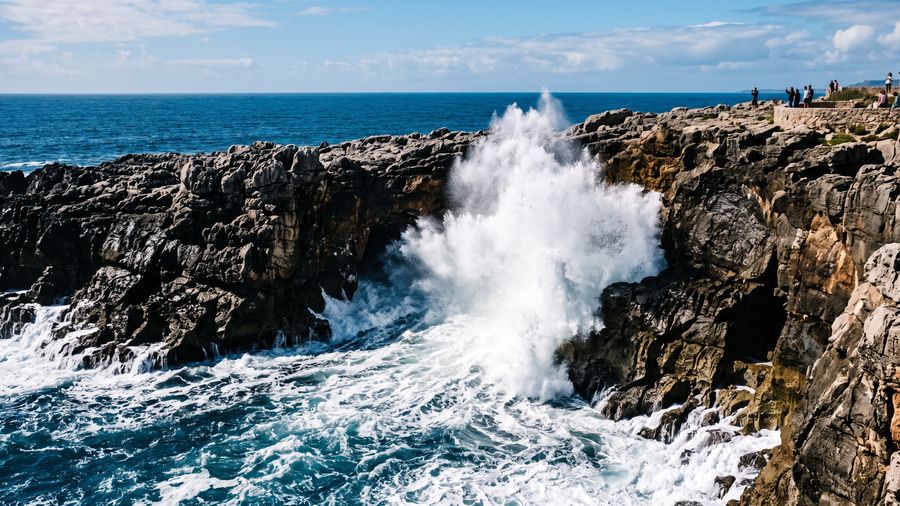
When the city gets hot, do what Lisboetas do and head to the coast. Trains from Cais do Sodré run along the river and out to the Atlantic in about 40 minutes, stopping at beach towns along the way. Cascais, at the end of the line, is a former fishing village turned upmarket resort, with sandy coves, a pretty marina and a lovely old town. Walk or cycle along the coastal path to Boca do Inferno, where waves crash into a dramatic rock chasm. Surfers should check out Carcavelos, one of the stops on the way, or Guincho beach further along the coast, which is great for surfing and kitesurfing but has strong winds. The Atlantic is chilly, even in summer, so bring a sense of adventure.
Discover the Tile Museum
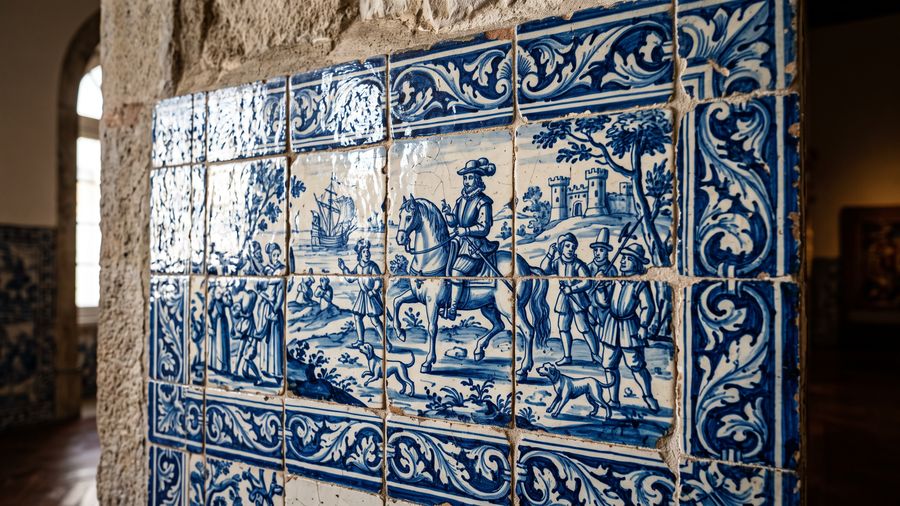
Lisbon is covered in azulejos, the painted ceramic tiles you’ll see on facades, churches and metro stations all over the city. To understand them properly, visit the Museu Nacional do Azulejo, housed in a 16th-century convent a little east of the centre. The collection traces five centuries of tile-making, from Moorish geometric patterns to blue-and-white Baroque scenes and modern designs. The highlight is a huge tiled panorama of Lisbon as it looked before the 1755 earthquake, stretching for around 23 metres. The convent’s gilded chapel is spectacular too. It’s a bit out of the way, so take a bus or a short taxi ride, and pair it with lunch in the museum’s tiled café.
Explore LX Factory
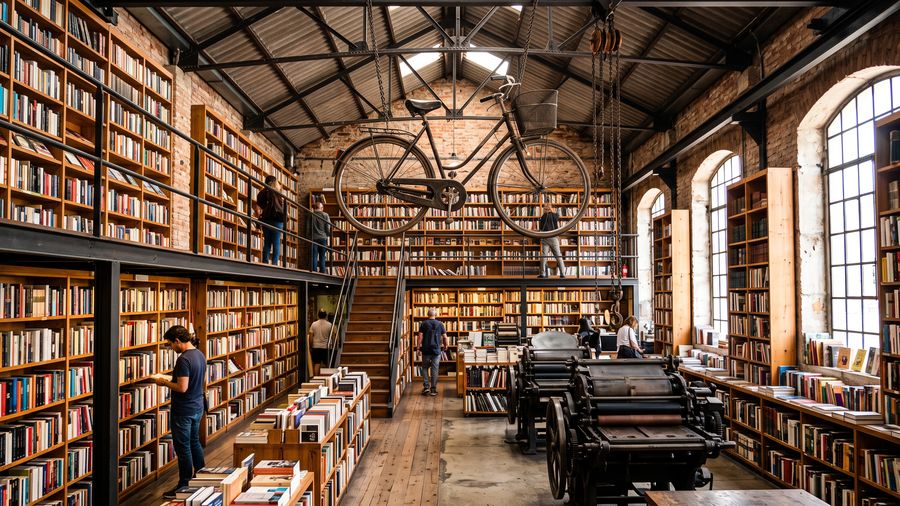
LX Factory is a former industrial complex under the 25 de Abril Bridge that has been transformed into a creative hub. Old warehouses and printing works are now home to restaurants, bars, design shops, studios and street art. The undisputed highlight is Ler Devagar, a bookshop inside an old printing press with towering shelves and a bicycle hanging from the ceiling. On Sundays there’s usually a market with local makers and vintage stalls. LX Factory is in Alcântara, on the way to Belém, so it’s easy to combine with a morning at the monastery. Come in the evening and stay for dinner or drinks on one of the rooftops, which have great views of the bridge.
Go Out in Bairro Alto and Pink Street
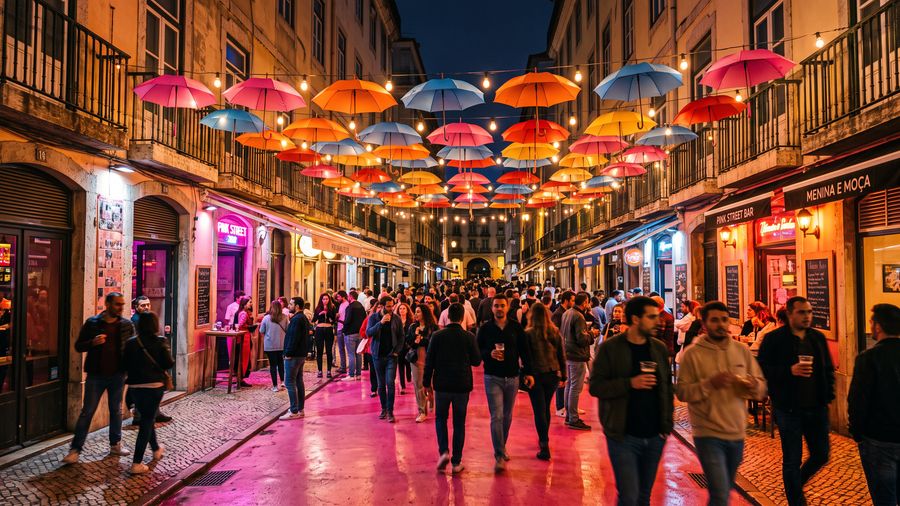
Lisbon has a fun, relaxed nightlife. Bairro Alto is a grid of narrow streets lined with tiny bars, and on weekend nights the whole neighbourhood turns into a giant street party, with people spilling out onto the cobblestones with cheap drinks in plastic cups. Down the hill in Cais do Sodré, Rua Nova do Carvalho, better known as Pink Street for its painted road, was once the city’s red-light district and is now packed with bars and clubs. Things don’t get going until late, usually after 11 pm. Try ginjinha, a sour cherry liqueur, at one of the tiny hole-in-the-wall bars near Rossio. Keep an eye on your belongings in crowds, and ignore anyone offering to sell you drugs in the street.
Ride the Santa Justa Lift
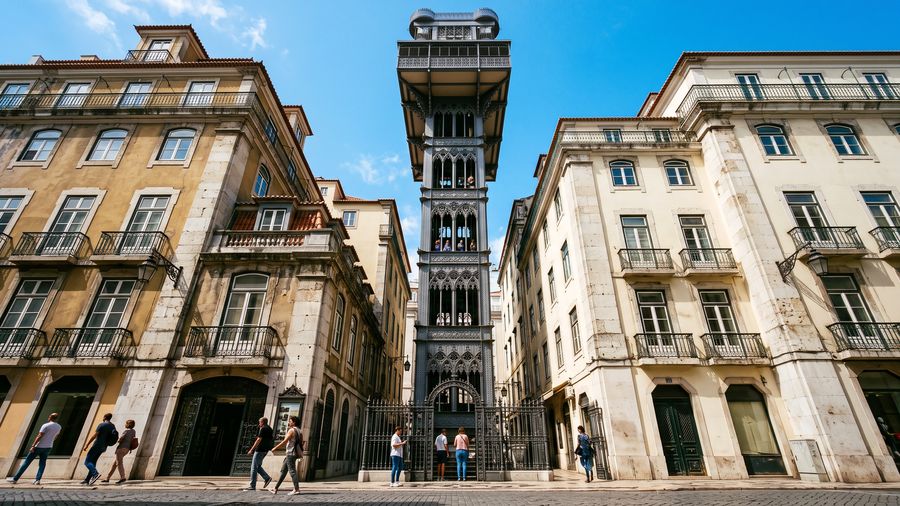
The Santa Justa Lift is a neo-Gothic iron elevator built in 1902 to connect the flat Baixa with the hilltop Carmo district. It was designed by an apprentice of Gustave Eiffel, and you can see the family resemblance in the ironwork. The ride itself takes less than a minute, and queues can stretch for an hour at peak times. Here’s the trick: you can walk to the viewing platform at the top for a small fee via a back entrance from the Largo do Carmo, next to the convent ruins, without queuing for the lift. The view from the top looks out over the Baixa grid towards the castle. Lisbon also has three historic funiculars (Glória, Bica and Lavra) that are just as fun.
Visit the Gulbenkian Museum
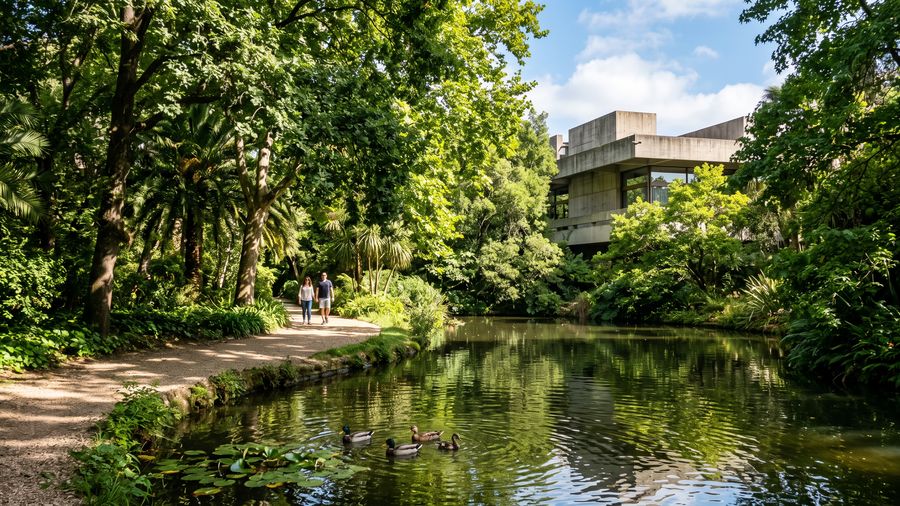
The Calouste Gulbenkian Museum is one of Lisbon’s most underrated attractions. It houses the private collection of an Armenian oil magnate who made Lisbon his home, and it’s remarkably diverse, with Egyptian artefacts, Islamic ceramics, Chinese porcelain, European paintings by Rembrandt and Rubens, and a stunning collection of Art Nouveau jewellery by René Lalique. A separate modern collection showcases Portuguese art from the 20th century to today. The building sits in beautiful gardens with ponds, ducks and shaded paths, which are free to wander and a lovely escape from the busy centre. It’s a short Metro ride from the old town, and it rarely feels crowded.
Shop at the Feira da Ladra
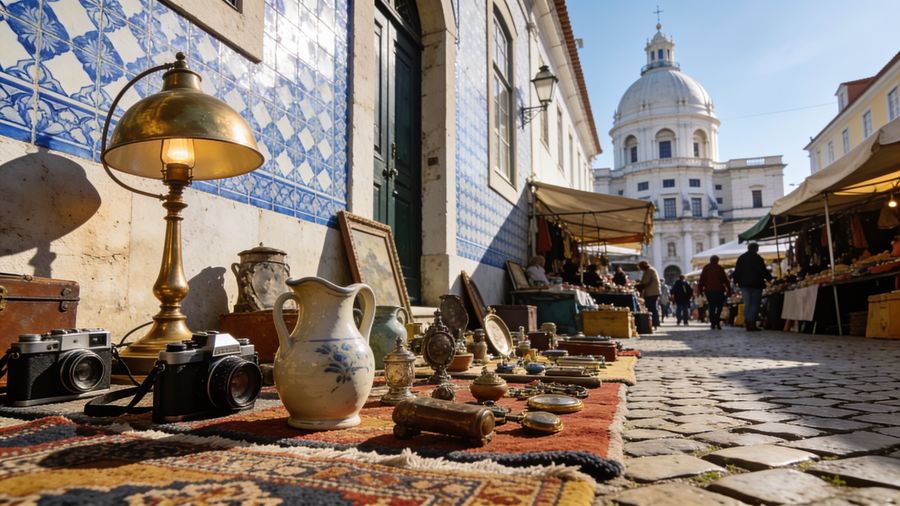
The Feira da Ladra (Thieves’ Market) is Lisbon’s biggest flea market, held every Tuesday and Saturday in Campo de Santa Clara, between Alfama and Graça. Stalls sell everything from vintage clothes, old postcards and vinyl records to antique tiles, military memorabilia and random junk. It’s a great place to hunt for a unique souvenir, and haggling is expected. Go in the morning, when the selection is best. The market sits right next to the National Pantheon, whose dome you can climb for views over the river, and the São Vicente de Fora Monastery, which has some of the finest tile panels in the city. Combine all three for a relaxed half day in this part of town.
Practical Tips for Visiting Lisbon
Getting there and around: Lisbon’s airport is close to the city, and the red Metro line gets you into town in about 20 minutes. For getting around, buy a rechargeable Navegante card and load it with credit or a 24-hour pass that covers the Metro, buses, trams and funiculars. If you plan to see a lot of sights and visit Sintra or Cascais, the Lisboa Card bundles transport with free or discounted entry to many attractions.
Where to stay: Baixa and Chiado are central and flat, Alfama is atmospheric but hilly, and Príncipe Real is leafy and stylish. Wear comfortable shoes wherever you stay, because the hills and polished cobblestones are no joke, especially after rain.
When to go: spring and autumn are ideal. June brings the Santo António festival, with grilled sardines and street parties across the old neighbourhoods. July and August are hot, crowded and pricier.
Staying Connected in Lisbon
You’ll use your phone a lot in Lisbon, from checking tram times and booking Sintra tickets to finding that tasca with the great reviews or navigating Alfama’s confusing alleyways. Free Wi-Fi is easy to find in cafés, but you don’t want to be hunting for a connection when you’re lost on a hill at night.
A travel eSIM from ZenSim is the easy fix. Install it before you leave Australia, and it connects to a local Portuguese network as soon as you land, without any roaming bills. Our Europe travel eSIM covers Portugal and 39 other countries on one plan, starting at A$9 ($6 USD), so you can carry on to Spain, France or Italy without swapping SIMs.
The Best of Lisbon
Lisbon is one of those cities you can visit again and again and always find something new. Even with fifteen ideas, this list only scratches the surface. I haven’t mentioned the Oceanário, one of the best aquariums in Europe, the street art of Graça, or the beaches of the Arrábida coast across the river.
To see the best of it, you’ll just have to go for yourself. Take it slowly, eat a pastel de nata (or three) every day, and save at least one evening for watching the sunset from a miradouro with a glass of vinho verde in hand. Lisbon has a way of winning people over, and I’m willing to bet it’ll do the same to you.
FAQs
Three to four days is ideal. That gives you time for Alfama, Belém, the viewpoints and the food scene, plus a day trip to Sintra. With five days or more, add Cascais, the Arrábida coast or a slow day exploring neighbourhoods like Príncipe Real and Campo de Ourique.
Lisbon has become pricier as it has grown in popularity, especially for accommodation, but it is still one of the more affordable capitals in Western Europe. Coffee, pastries, public transport and casual meals are cheap compared to Paris, London or Amsterdam.
Walk where you can, and use the Metro, trams, buses and funiculars for the steep bits. A rechargeable Navegante card loaded with credit or a 24-hour pass is the easiest option, and the Lisboa Card adds free entry to several attractions plus trains to Sintra and Cascais.
Spring (March to May) and autumn (September to October) offer warm, sunny weather without peak-season crowds. June is lively thanks to the Santo António festival, while July and August are hot, busy and more expensive.
Yes, but go early in the morning or later in the evening to avoid long queues, and keep an eye on your belongings because pickpockets target the crowded carriages. Tram 12 covers part of the same historic route and is usually far less busy.
Travel eSIMs you may like:
Written by
Ryan Frawley
Travel writer and serial border crosser.
I've visited more than 30 countries so far, which sounds impressive until you see how long my travel wish list still is. When I'm not chasing cheap flights, figuring out eSIMs, or getting lost in places I can't properly pronounce, I'm usually writing about travel, remote work, and how to make both a little easier.
If you've ever searched "Can I work remotely from there?" at 2 a.m., we're probably on the same wavelength.

Get amongst it
Join the community
We will reach out when we launch new products, about our sustainability projects, specials, new innovations or maybe even cool sh*t we think is inbox worthy.


