



There are so many great reasons to visit Vietnam, from rich culture to beautiful scenery to friendly people. But let’s not pretend that food isn’t part of the equation. The reality is, Vietnam is one of the world’s great street food destinations.

Travel eSIMs you may like:

Street food isn’t an afterthought or a trend here, but an authentic way of life that has been perfected over generations. Just about everywhere you go, from major cities like Hanoi to backwater villages out in the mountains, you’ll find people making traditional recipes and fusion cuisine at roadside stalls, market stands and out of their own homes.
Fresh ingredients, bold flavours and unbelievably affordable prices all combine to make Vietnam’s street food scene truly unmissable. Let’s take a look at the street food you simply have to try in Vietnam, including the city each dish is best in and roughly what you’ll pay. Prices are rough guides for a typical street stall, worked out at about VND 18,000 to A$1 at the time of writing, and you’ll pay more in touristy areas and sit-down restaurants.
But first, a warning: you might want to have some snacks close by, because you’re going to be hungry by the time you finish this article!
Pho: A Worldwide Pho-Nomenon
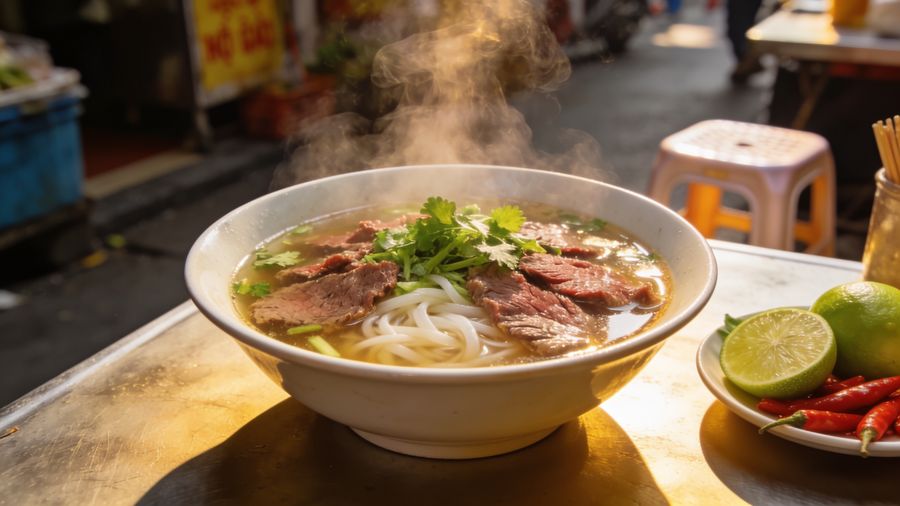
There’s no controversy in saying that pho (phở) is Vietnam’s most famous dish. In recent years, this rich broth of rice noodles, fresh herbs and beef or chicken has become popular worldwide, with just about every major city having its own Vietnamese restaurant serving up a different take on the dish. Still, sampling it at a Vietnamese street stall is something entirely different.
Pho actually varies across the country. In the north, where the dish was born, it’s simpler, focusing on the rich, intense flavour of a broth that has been simmered for hours. In the south, cooks tend to get more creative, serving it with a mountain of herbs, bean sprouts, lime, hoisin and chilli sauce on the side.
Pho can be enjoyed at any time of day, but lots of locals eat it for breakfast, and the best stalls often sell out by mid-morning.
Best in: Hanoi, where you can try phở bò (beef) or phở gà (chicken) in the Old Quarter.
Rough price: VND 40,000-70,000 (about A$2.20-3.90) a bowl.
Banh Mi: More Than Just a Sandwich
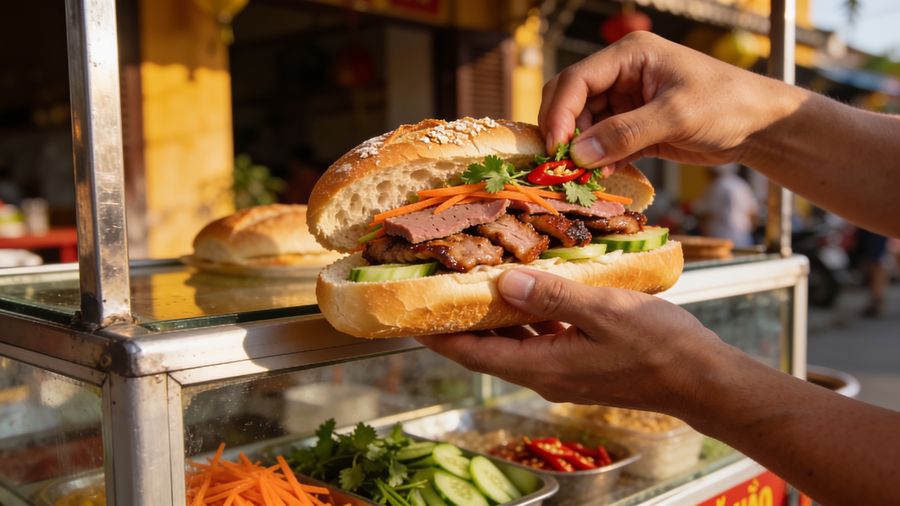
Sometimes, food can tell a story. A country’s cuisine often preserves the record of its culture and its past, and that’s definitely the case with the ever-popular bánh mì. This sandwich is part of the legacy of French colonial influence in Vietnam, with the iconic crispy baguette transformed into something uniquely Vietnamese, with a lighter, airier crumb and a crackly crust.
Popular ingredients include:
- Grilled or roast pork
- Pâté
- Pickled carrot and daikon
- Chilli
- Cucumber
- Coriander
These eclectic ingredients merge into a delicious combination of textures and flavours. You’ll find these incredible sandwiches just about everywhere, and they’re affordable and portable, so they’re ideal for travellers on the move.
Best in: Hội An, home to some of the most famous bánh mì shops in the country, with Ho Chi Minh City a close second.
Rough price: VND 20,000-40,000 (about A$1.10-2.20).
No matter how you like to spend your time travelling, it’s always easier when you can stay connected. ZenSim offers affordable Vietnam eSIM plans that connect your phone to a local network, so you can use data without worrying about roaming fees. You’ll have full access to maps, translation apps and travel forums to help you hunt down the best dishes in the country.
Bun Cha: Hanoi’s Signature Lunch
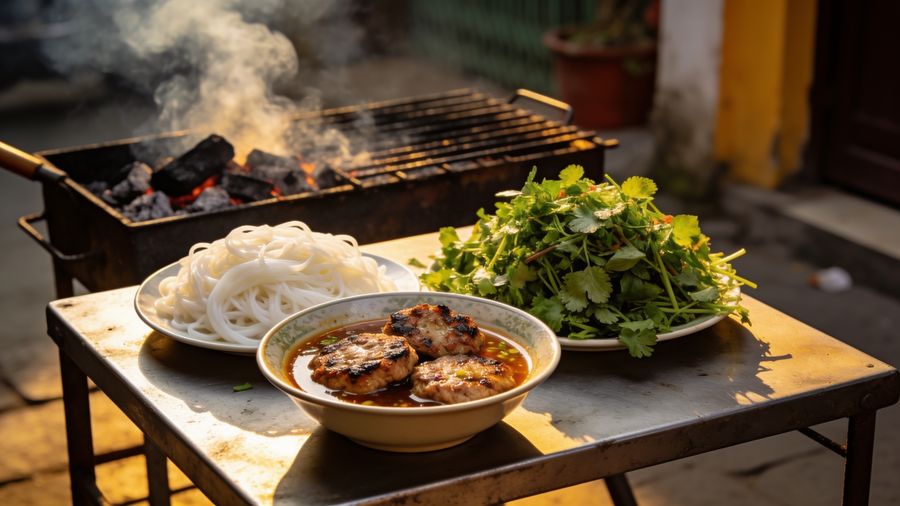
Bún chả is not as internationally well-known as pho and bánh mì, but it’s still a staple on the menus of Vietnamese restaurants around the world. In Hanoi, it’s a lunchtime ritual, and you’ll smell the charcoal smoke drifting down the street long before you spot the stall.
Bún chả is based around grilled pork, both sliced pork belly and little seasoned patties, served in a bowl of sweet and tangy dipping sauce with pickled green papaya. On the side, you’ll get a plate of rice noodles and a pile of fresh herbs and lettuce. The meal comes as separate components, so you can assemble each bite to your taste. Add a crispy fried spring roll (nem rán) to make it a feast.
It’s hard to beat the flavour of charcoal-grilled meat, and combined with the freshness of the herbs, it’s an unforgettable meal. Former US president Barack Obama famously shared a bowl with chef Anthony Bourdain at a Hanoi bún chả shop in 2016.
Best in: Hanoi, at lunchtime.
Rough price: VND 40,000-70,000 (about A$2.20-3.90).
Goi Cuon: Fresh Spring Rolls
As delicious as street food can be, it can get to be a little much. Often, there’s an emphasis on heavy fried or grilled foods that can weigh you down after a while.
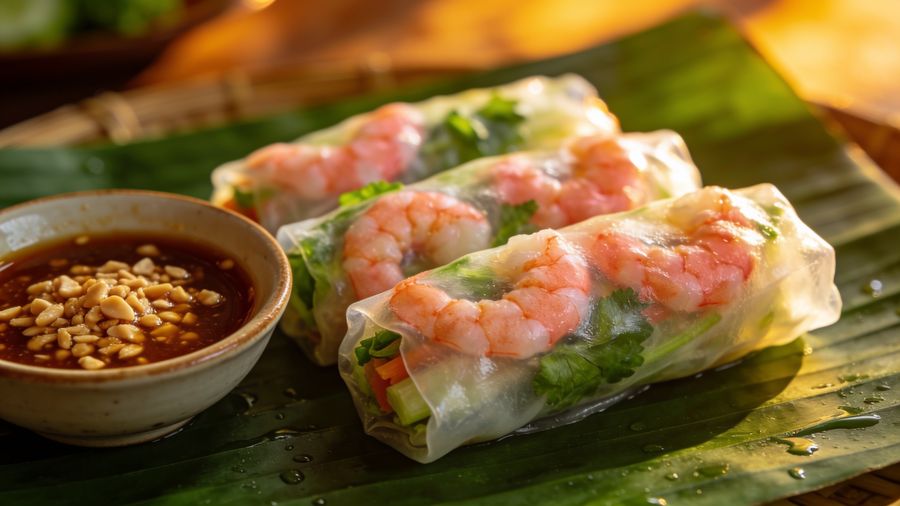
Vietnam’s fresh spring rolls, gỏi cuốn, provide a much-needed light alternative that keeps your hunger at bay without overloading your system. These rice paper wraps are filled with ingredients like prawns, pork, rice noodles, lettuce and fresh herbs, so each bite is cool, crunchy and fresh. Typically, they’re served with a flavourful dipping sauce made with peanuts and hoisin, or with fish sauce.
You’ll find fresh spring rolls throughout the country, but they’re particularly popular in southern Vietnam, where they’re often eaten as a snack in the afternoon. They’re a great option on a hot day, and a good one to order if you’re easing your stomach into Vietnamese food. In Hanoi, look for the similar phở cuốn, which wraps beef and herbs in sheets of fresh pho noodle instead of rice paper.
Best in: Ho Chi Minh City.
Rough price: VND 20,000-40,000 (about A$1.10-2.20) for a plate of a few rolls.
Banh Xeo: Crispy Vietnamese Pancakes
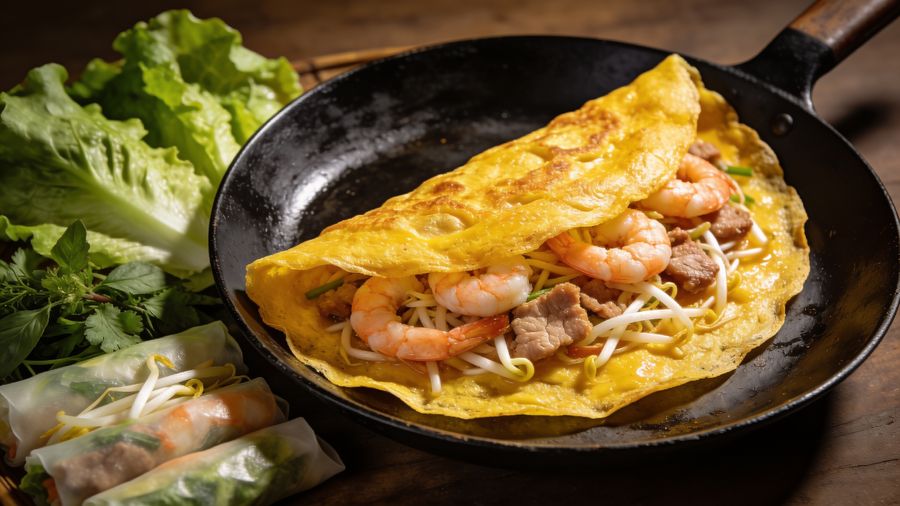
The name bánh xèo translates to “sizzling pancake”, after the sound the batter makes when it’s poured into a hot pan. Bánh xèo are made from rice flour and turmeric (often with coconut milk in the south), which gives them their bright yellow colour and lacy, crispy edges. They’re filled with prawns, pork and bean sprouts, then folded over like an omelette.
To eat one, tear off a piece, wrap it in a lettuce or mustard green leaf with a handful of herbs, and dunk it into a sweet, tangy fish sauce dip. It’s messy, so don’t be shy about using your hands.
The pancakes change as you travel. In the south, they’re huge and made to share, while on the central coast, including Hội An and Quy Nhơn, they’re smaller and crunchier, and in Huế, a similar version is called bánh khoái. They’re best eaten at a busy stall where they come straight from the pan to your plate.
Best in: Ho Chi Minh City and the Mekong Delta for the big ones, the central coast for the small, crispy kind.
Rough price: VND 30,000-80,000 (about A$1.70-4.40).
Cao Lau: A Hoi An Specialty
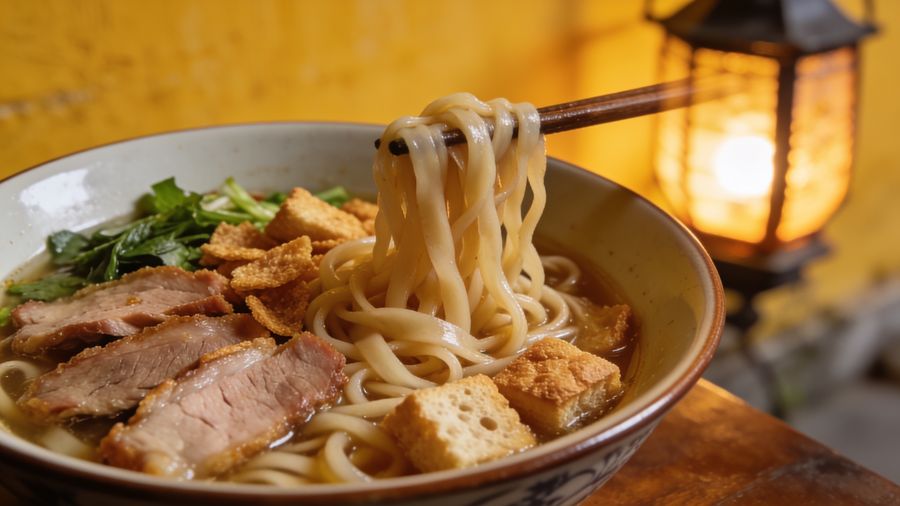
It’s always fun to try the local specialties when you travel somewhere new. If you find yourself in historic Hội An, keep your eyes open for a restaurant or stall selling cao lầu.
Cao lầu isn’t a soup like pho. Instead, it’s a bowl of noodles served with just a small amount of rich, savoury sauce, topped with slices of char siu-style pork, fresh herbs and greens, and crunchy croutons made from fried noodle dough. What makes it unique is the noodles. They’re thick and chewy, with a texture that’s been compared to Japanese udon, and they’re traditionally made with water from a local well and lye from wood ash.
Because of that, locals will tell you that real cao lầu can only be found in Hội An, and it’s rarely seen outside the town. Tuck into a bowl at the central market or a family-run stall in the old town, then wander the lantern-lit streets to walk it off.
Best in: Hội An.
Rough price: VND 30,000-50,000 (about A$1.70-2.80).
Com Tam: Broken Rice with Big Flavour
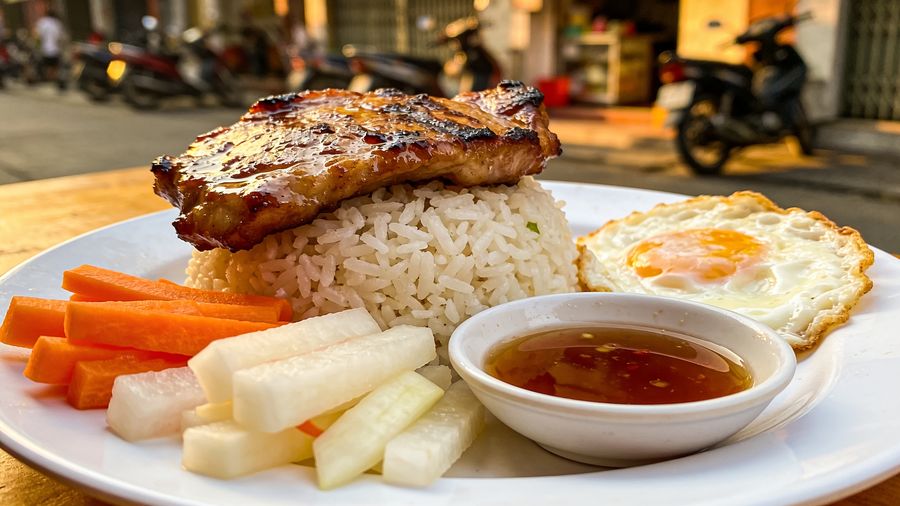
Often served for breakfast or lunch, cơm tấm started as a way to use broken rice grains that were once considered unfit for sale. Historically, this was a dish for poorer families, but over time it has evolved into a beloved staple of southern Vietnamese cuisine.
The broken rice is usually topped with a sweet, smoky grilled pork chop, a fried egg, shredded pork skin, a slice of steamed egg meatloaf and pickled vegetables, all drizzled with fish sauce and spring onion oil. It’s simple and filling, but it doesn’t skimp on flavour, and the slightly nutty texture of the broken grains is surprisingly addictive.
Cơm tấm is less well known internationally than pho or bánh mì, so having it in Vietnam will give you a genuinely local taste of the country. Look for stalls with a smoking charcoal grill out the front, especially in the morning and at lunchtime.
Best in: Ho Chi Minh City.
Rough price: VND 35,000-60,000 (about A$1.95-3.30).
Bun Bo Hue: The Spicy Soup from the Old Capital
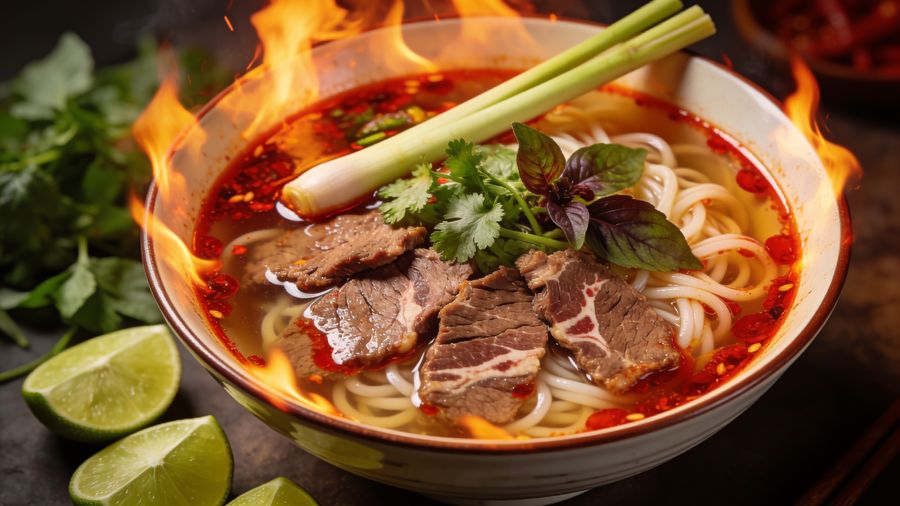
If you like your noodle soups with a bit of kick, bún bò Huế might end up being your favourite dish in Vietnam. It comes from Huế, the former imperial capital in central Vietnam, and it’s bolder, spicier and more complex than pho.
The broth is simmered with beef and pork bones, then flavoured with lemongrass, chilli oil and fermented shrimp paste, giving it a fragrant, slightly funky depth. It’s served with thick, round rice noodles, beef shank, pork knuckle and, for the adventurous, cubes of congealed pig’s blood. Add lime, herbs, banana blossom and extra chilli to taste.
Locals in Huế mostly eat it for breakfast, so head out early and look for stalls packed with people perched on tiny stools. You can find bún bò Huế across the country, but nothing beats a bowl in its hometown.
Best in: Huế.
Rough price: VND 35,000-60,000 (about A$1.95-3.30).
Banh Cuon: Silky Steamed Rice Rolls
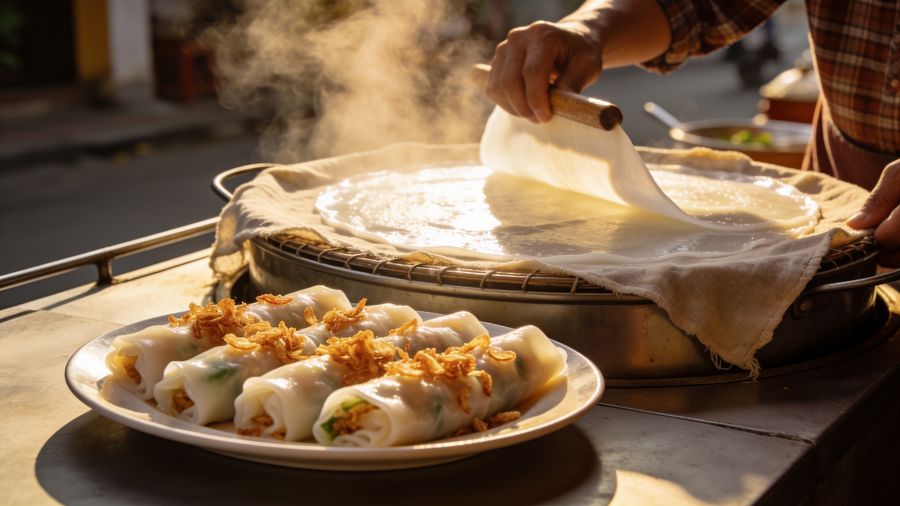
Bánh cuốn is one of Hanoi’s favourite breakfasts, and watching it being made is half the fun. The cook ladles a thin rice batter onto a cloth stretched over a pot of boiling water, steams it for a few seconds, then deftly peels off a delicate, almost translucent sheet.
The sheets are filled with minced pork and wood ear mushrooms, rolled up and topped with crispy fried shallots. They’re served with slices of chả lụa (Vietnamese pork sausage), fresh herbs and a bowl of warm, lightly sweetened fish sauce for dipping. The result is soft, silky and incredibly moreish, and it’s a lot lighter than a bowl of noodle soup first thing in the morning.
You’ll find bánh cuốn stalls dotted around Hanoi’s Old Quarter in the morning. Look for a cook working over a steaming pot, as freshly made rolls are far better than ones that have been sitting around.
Best in: Hanoi, at breakfast.
Rough price: VND 25,000-45,000 (about A$1.40-2.50).
Bun Rieu: Crab and Tomato Noodle Soup
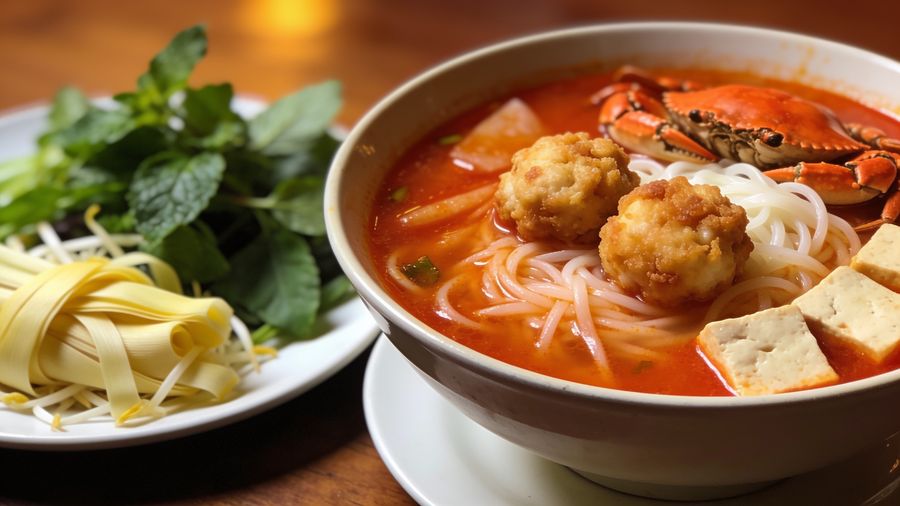
Bún riêu is a bright, tangy noodle soup that doesn’t get nearly as much attention as it deserves. The broth is made with tomatoes and freshwater crab, which is pounded, shell and all, and strained to create fluffy, savoury clumps of crab that float on top of the soup.
Each bowl comes with thin rice noodles, fried tofu and often slices of beef or pork sausage, plus a plate of herbs, shredded banana blossom and morning glory to add as you go. A spoonful of fermented shrimp paste and a squeeze of lime give it extra punch. It’s sour, savoury and refreshing all at once, which makes it a brilliant choice on a hot day.
Bún riêu is eaten all over Vietnam, but the northern version is a Hanoi favourite. Look for a pot with a vivid orange-red broth and a crowd of locals around it.
Best in: Hanoi.
Rough price: VND 30,000-50,000 (about A$1.70-2.80).
Mi Quang: Turmeric Noodles from the Central Coast
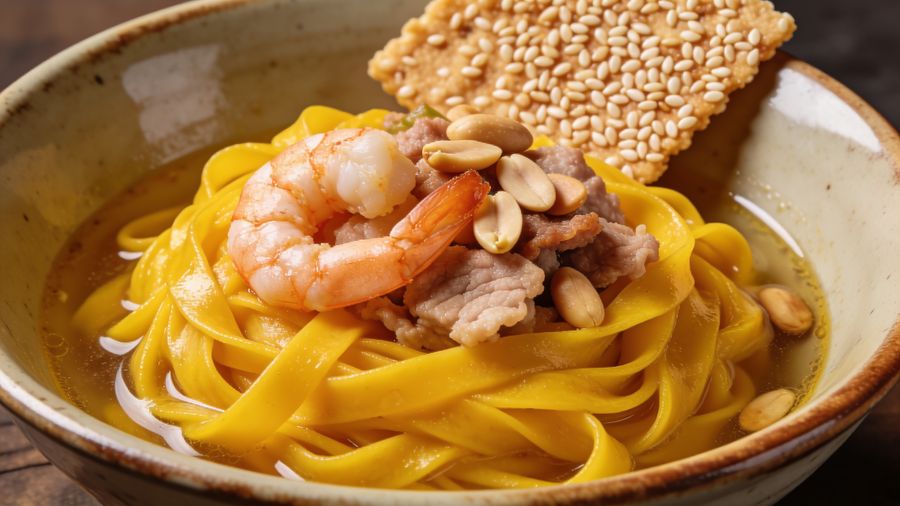
Mì Quảng is the signature dish of Quảng Nam province, which includes Hội An, and it’s just as popular in neighbouring Đà Nẵng. Like cao lầu, it sits somewhere between a soup and a noodle salad, with just a ladle of rich, concentrated broth poured over the top.
The wide, flat rice noodles are often tinted yellow with turmeric, then topped with prawns, pork, chicken or fish, along with quail eggs, roasted peanuts and fresh herbs. The best part is the giant sesame rice cracker served on the side, which you break into pieces and crumble over the bowl for crunch. Every family seems to have its own version, so it’s worth trying it a few times.
It’s an easy dish to fall in love with, and it’s a good introduction to the bolder flavours of central Vietnam.
Best in: Hội An and Đà Nẵng.
Rough price: VND 30,000-50,000 (about A$1.70-2.80).
Banh Khot and Banh Can: Bite-Sized Pancakes
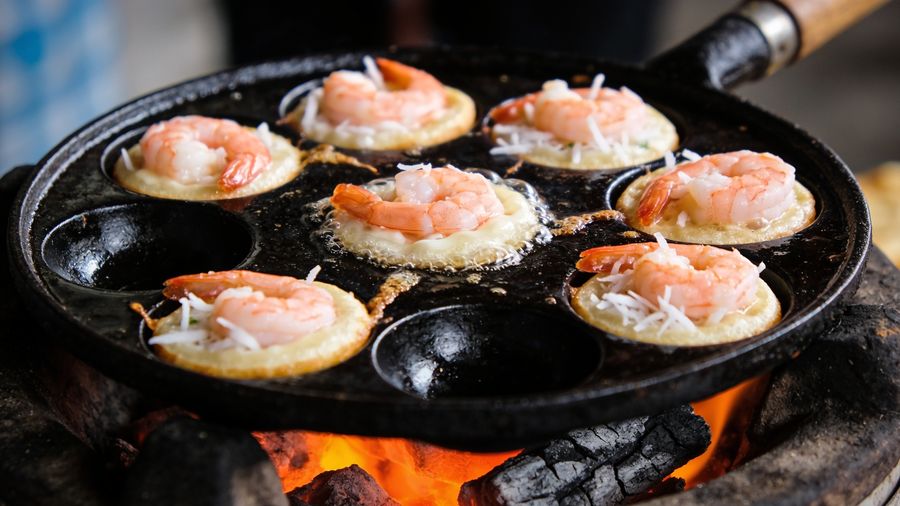
If bánh xèo is the big brother, bánh khọt and bánh căn are the snack-sized siblings. Both are little rice flour pancakes cooked in special moulds with rows of round hollows, and both are dangerously easy to keep eating.
Bánh khọt comes from the coastal city of Vũng Tàu, southeast of Ho Chi Minh City. The pancakes are crispy on the outside and soft in the middle, made with coconut milk and topped with a whole prawn and spring onion oil. Wrap them in lettuce and herbs and dip them in fish sauce.
Bánh căn is cooked in clay moulds over charcoal and is a favourite in the cool highland city of Đà Lạt and along the south-central coast. It’s often made with a quail egg cracked into each one, and in Đà Lạt it’s served with a bowl of meatball broth for dunking.
Best in: Vũng Tàu for bánh khọt, Đà Lạt for bánh căn.
Rough price: VND 30,000-60,000 (about A$1.70-3.30) a plate.
Cha Ca La Vong: Hanoi’s Sizzling Turmeric Fish
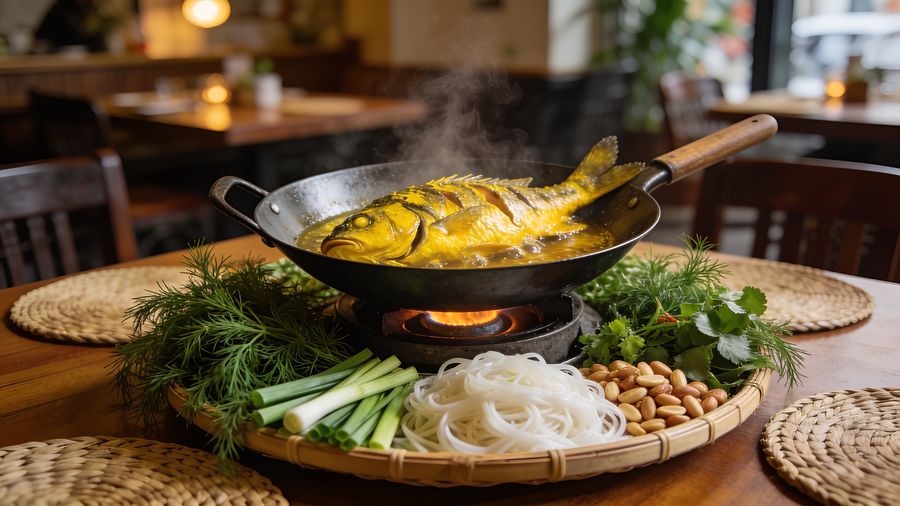
Chả cá Lã Vọng is so famous in Hanoi that there’s a street in the Old Quarter named after it. It’s more of a sit-down meal than a grab-and-go snack, but it’s worth the detour.
Chunks of white fish are marinated in turmeric, galangal and fermented rice, grilled, and then brought to your table in a sizzling pan of oil over a small burner. You toss in handfuls of fresh dill and spring onions, let them wilt, then scoop everything into a bowl with rice noodles, roasted peanuts, herbs and a splash of fish sauce or fermented shrimp paste.
The combination of turmeric and dill sounds unusual, but it really works. Because it’s cooked at the table, it’s a fun meal to share with a group, and a good one for a slightly fancier night out.
Best in: Hanoi.
Rough price: VND 120,000-200,000 (about A$6.70-11.10) per person at well-known restaurants, less at smaller local spots.
Ca Phe Trung: Hanoi’s Famous Egg Coffee
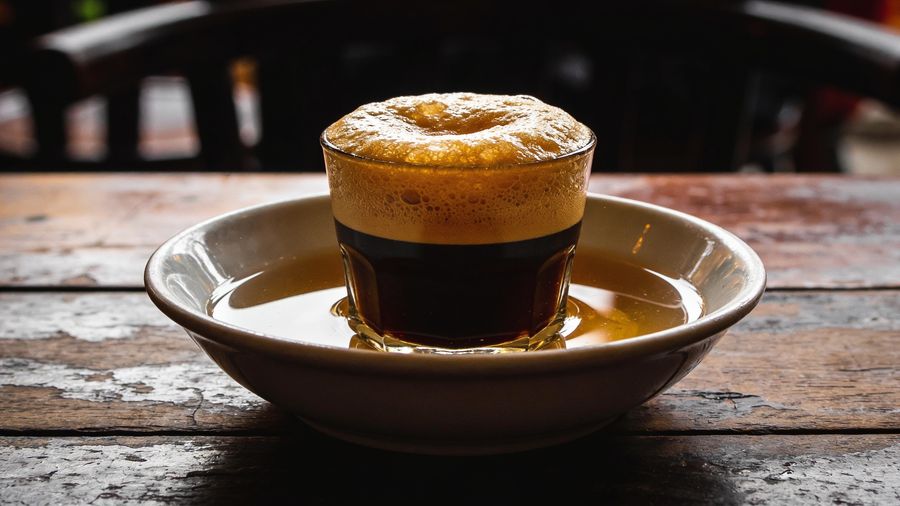
Vietnam takes its coffee seriously, and egg coffee is its most surprising creation. It was invented in Hanoi in the 1940s, when fresh milk was scarce and a bartender named Nguyễn Văn Giảng whipped egg yolks with sugar and condensed milk as a substitute. His family still runs a café in the Old Quarter today.
The result tastes a little like liquid tiramisu. A shot of strong, dark Vietnamese coffee sits at the bottom of the cup, topped with a thick layer of sweet, creamy egg foam that you eat with a spoon. It’s often served in a small bowl of hot water to keep it warm, and there’s a cold version for hot days.
Pair it with a seat on a tiny stool overlooking the street, and you’ve got the perfect Hanoi afternoon. While you’re at it, try cà phê sữa đá (iced coffee with condensed milk), which is Vietnam’s everyday favourite.
Best in: Hanoi.
Rough price: VND 30,000-60,000 (about A$1.70-3.30).
Che: Vietnam’s Sweet Dessert
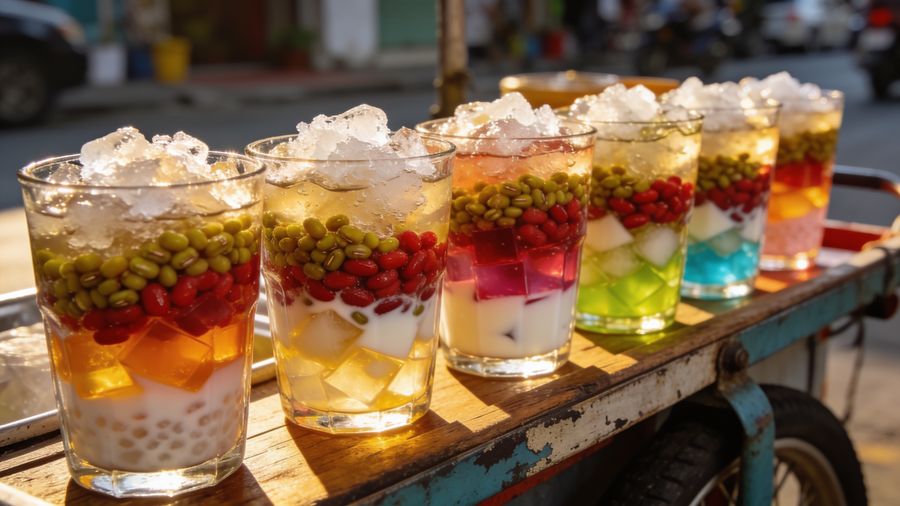
No meal is complete without dessert, so it makes sense to finish our dish list with a sweet treat. Chè is in many ways more of a concept than a specific dish, as the word describes dozens of different Vietnamese sweet soups, puddings and drinks that can include anything from coconut milk to mung beans to fruit to sticky rice and jelly.
Some are served warm, others over crushed ice in a tall glass, which makes them a lifesaver on a sweltering afternoon. Popular versions include chè ba màu (three-colour dessert with beans, jelly and coconut milk) and chè bưởi, made with pomelo and mung beans. Look for stalls with rows of glass jars full of colourful toppings, then point at whatever looks good.
Every region has its own specialty, and Huế in particular is famous for its huge range of chè, so it’s worth sampling as many different forms as you can.
Best in: Huế, though you’ll find it all over Vietnam.
Rough price: VND 15,000-35,000 (about A$0.85-1.95).
Street Food Etiquette and Safety Tips
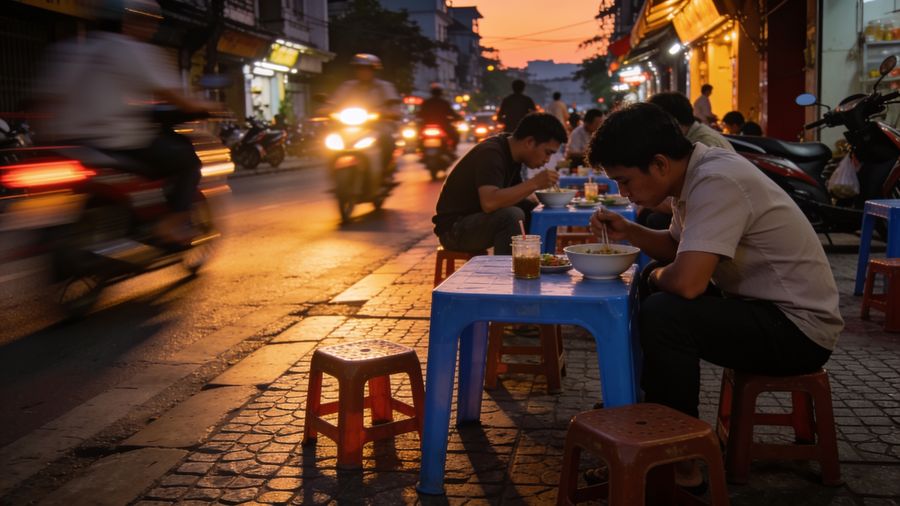
Eating on the street in Vietnam is easy once you know how it works, and a few simple habits will help you eat well and stay healthy.
- Embrace the tiny plastic stools. Most stalls have low tables and stools, so squeeze in, share space with strangers and enjoy it.
- Pick busy stalls. A crowd of locals means good food and a high turnover, which also means fresher ingredients.
- Many stalls make just one dish. Sit down, hold up fingers to show how many bowls you want, and point at the menu or at what other people are eating.
- Check the price first if there’s no menu, especially in tourist areas.
- Carry small notes in dong, as most stalls are cash only.
- Stick to bottled or filtered water, and if your stomach is sensitive, go easy on ice and raw herbs for the first few days.
- Wipe your chopsticks and spoon with a napkin before you eat. Locals do it too.
- Throwing used napkins on the floor is normal at some stalls, but follow what the locals are doing.
A translation app with a camera function makes menus much easier to decode, and offline maps help you find your way back to the hotel after a big night of eating.
Why Street Food Is the Best Way to Experience Vietnam
No matter where you go in the world, you find the same thing: food is inextricably tied to culture and history. That’s just as true in Vietnam as it is in any other country.
Many recipes used here have been passed down through families for generations, so trying street food in Vietnam gives you a sensory encounter with local life. Each region has its own specialities, which is the perfect excuse to plan a trip that starts with pho and egg coffee in Hanoi, takes in cao lầu and mì Quảng in Hội An and bún bò Huế in Huế, and ends with cơm tấm and bánh xèo in Ho Chi Minh City.
With your phone connected via a Vietnam travel eSIM, you can check reviews, get recommendations, use translation apps and upload photos of your delicious meals. For a full rundown of your options, see our guide to the best eSIMs for Vietnam. The very best way to explore Vietnam might be through your taste buds, so make note of these dishes and immerse yourself in a street food scene like no other.
FAQs
Generally yes, as long as you use a bit of common sense. Choose busy stalls with a high turnover of customers, look for food that is cooked fresh in front of you and stick to bottled or filtered water. If your stomach is sensitive, go easy on raw herbs and ice for the first few days.
Very little. Most street food dishes cost around VND 20,000 to 70,000, which works out to roughly A$1.10 to A$3.90 at the time of writing. Sit-down specialities and touristy areas cost more, but you can still eat very well for under A$15 a day.
Every region has its own specialities. Hanoi is the home of pho, bún chả, bánh cuốn and egg coffee, Hội An and the central coast are famous for cao lầu, mì Quảng and bánh mì, Huế is the place for bún bò Huế and Ho Chi Minh City is best for cơm tấm, gỏi cuốn and bánh xèo.
Yes. Most street stalls only take cash, so carry plenty of small notes in Vietnamese dong. Some vendors in the big cities accept QR code payments, but these are usually set up for local bank apps rather than foreign cards.
Look for signs saying chay, which means vegetarian. Many cities have dedicated vegetarian restaurants, especially around Buddhist temples, serving meat-free versions of pho, bánh mì and spring rolls. Chè and bánh xèo with tofu and mushrooms are also good options, though fish sauce is common, so ask before you order.
Travel eSIMs you may like:
Written by
Ryan Frawley
Travel writer and serial border crosser.
I've visited more than 30 countries so far, which sounds impressive until you see how long my travel wish list still is. When I'm not chasing cheap flights, figuring out eSIMs, or getting lost in places I can't properly pronounce, I'm usually writing about travel, remote work, and how to make both a little easier.
If you've ever searched "Can I work remotely from there?" at 2 a.m., we're probably on the same wavelength.


Get amongst it
Join the community
We will reach out when we launch new products, about our sustainability projects, specials, new innovations or maybe even cool sh*t we think is inbox worthy.


